
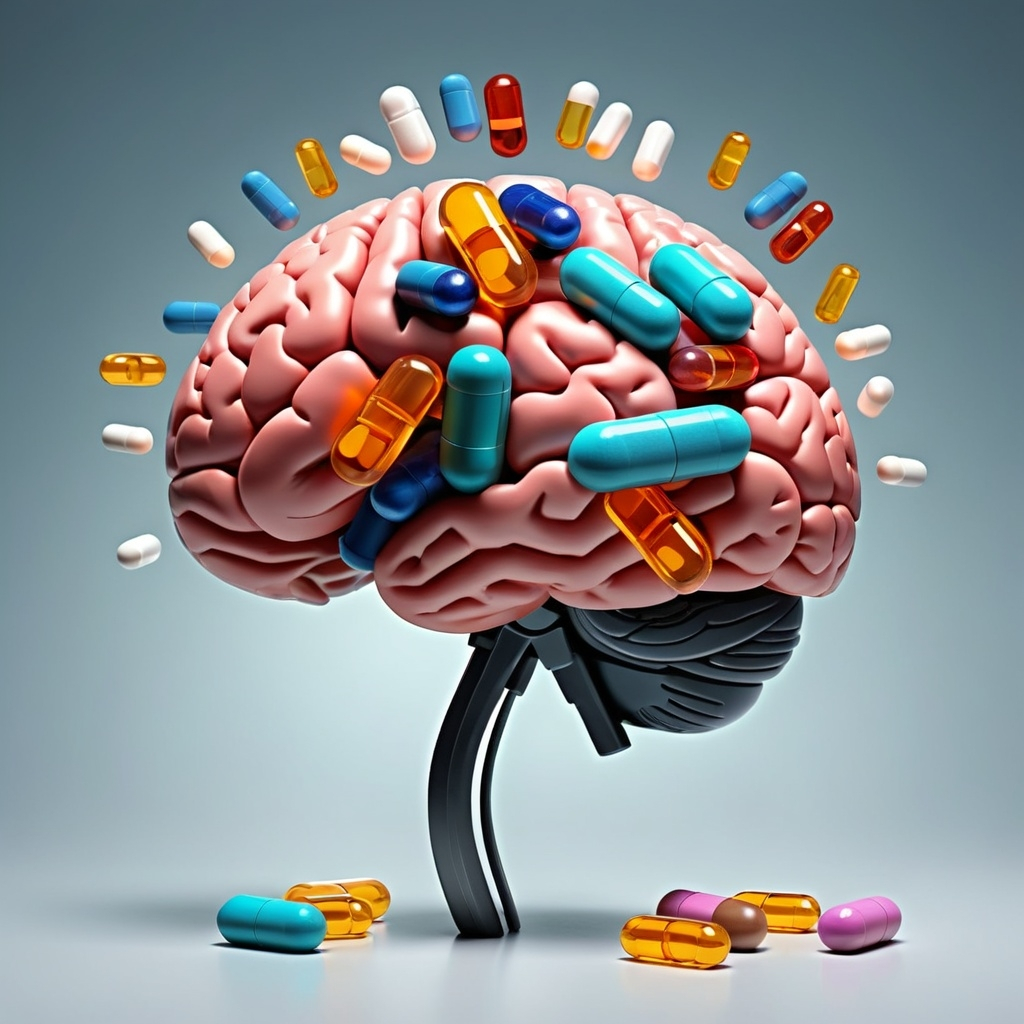
B Vitamins: Neurotransmitter Support and Homocysteine Reduction
- For instance, a comprehensive review of RCTs from 2018–2023 found that folic acid (400–800 µg/day) combined with B12 (25–500 µg/day) over 6–24 months enhanced full-scale IQ, verbal IQ, digit span, and memory in MCI patients, with reductions in amyloid-beta accumulation (p < 0.05).
- Similarly, combined B vitamins slowed cognitive decline in MCI cases with high homocysteine or frontal atrophy. A meta-analysis supported these findings, noting benefits for memory and cognition. Studies also link low B12 to progressive cognitive problems like Alzheimer’s and Parkinson’s; supplementation reverses some symptoms and improves focus in deficient individuals. However, if levels are normal, extra B vitamins may not yield additional brain benefits.
- Overall, B vitamins are among the most substantiated for brain health, with roles as cofactors in core pathways affecting cognition.
C Vitamins: Combating Oxidative Stress for Attention and Mood
- RCTs demonstrate benefits: 1000 mg/day over 4 weeks enhanced attention and reduced fatigue in young and older adults (p = 0.03), promoting mental vitality. Meta-analyses confirm mood improvements and potential decline prevention. It’s particularly effective in those with low baseline levels, contributing to neuronal protection alongside other vitamins. Benefits are stronger in hospitalized older adults or those with cognitive impairment.
D Vitamins: Neuroprotection and Plasticity Against Deficiency Risks
- One study showed that 800 IU/day over 12 months improved full-scale IQ, information processing, digit span, and vocabulary in older adults (p < 0.001).
- Another study found that 2000 IU/day enhanced paired associates learning in postmenopausal women (p < 0.05). Observational data indicates supplemented older adults are 40% less likely to develop dementia over 10 years, particularly women. However, some RCTs report no effects on cognition in healthy or AD populations. Supplementation is most beneficial for those with confirmed low levels, as it may reduce oxidative stress and support epigenetic aging regulation.
E Vitamins: Antioxidant Defense for Neuronal Integrity
As a potent antioxidant, vitamin E protects against lipid peroxidation and neuronal damage, with higher intake linked to reduced cognitive impairment and dementia risk. It contributes uniquely to brain health by safeguarding cell membranes. Evidence from reviews suggests vitamin E, often combined with others, supports cognitive function in aging.
- In RCTs, it enhanced memory and mood when paired with carotenoids and omega-3s in adults (p < 0.001 over 12 months). Association studies show lower dementia rates with higher serum levels, and it protects against amyloid-beta cytotoxicity. While isolated supplementation lacks robust standalone RCTs, its role in antioxidant synergies makes it valuable, especially in diets low in nuts, seeds, and oils.
Magnesium: Synaptic Plasticity and Neuroprotection
- A 2024 systematic review and meta-analysis of RCTs and cohorts found a U-shaped association between serum magnesium and cognitive outcomes: optimal levels (~0.85 mmol/L) linked to lower dementia and impairment risk, while low (<0.75 mmol/L) or high (>0.95 mmol/L) increased hazards (HR 1.43 and 1.30, respectively). Some RCTs with forms like magnesium L-threonate showed improvements in cognition, working memory, and sleep quality in adults.
Multivitamins: A Broad-Spectrum Approach to Slow Cognitive Aging
For comprehensive support, multivitamins containing over 20 micronutrients (including B vitamins, C, D, and E) show promise.
- The COSMOS trial, involving over 5,000 older adults, found daily multivitamins modestly improved global cognition and episodic memory over 2–3 years, slowing aging by an equivalent of two years compared to placebo. This meta-analysis of three studies provides strong evidence for preventing memory loss in those 60+.However, not all views are unanimous. A Harvard Health review cautions that while B vitamins, vitamin E, and omega-3s (non-vitamin) show dietary benefits for cognition, isolated supplements lack solid proof from large trials, emphasizing whole foods over pills.
Omega-3 Fatty Acids: Preserve and Improve Memory and Cognitive Function
Omega-3 fatty acids, particularly DHA (docosahexaenoic acid) and EPA (eicosapentaenoic acid), are essential for brain health due to their roles in neuronal membrane structure, reducing inflammation, and supporting synaptic function. While they won’t dramatically “boost” memory in everyone (e.g., no reliable IQ increases in healthy, well-nourished adults), evidence suggests they can help preserve or modestly improve memory and cognitive function, especially in certain groups.Strongest Evidence: Preventive and Protective Effects
- Observational and prospective studies consistently link higher dietary intake of omega-3s (from fish) or elevated blood levels to a ~20% lower risk of cognitive decline, mild cognitive impairment (MCI), or dementia.
- A 2023 meta-analysis of 48 longitudinal studies (over 100,000 participants) found dietary omega-3s reduced all-cause dementia/cognitive decline risk, with stronger effects for DHA.
- Higher blood DHA/EPA levels correlate with better memory performance and larger brain volumes in older adults.












0 Comments