
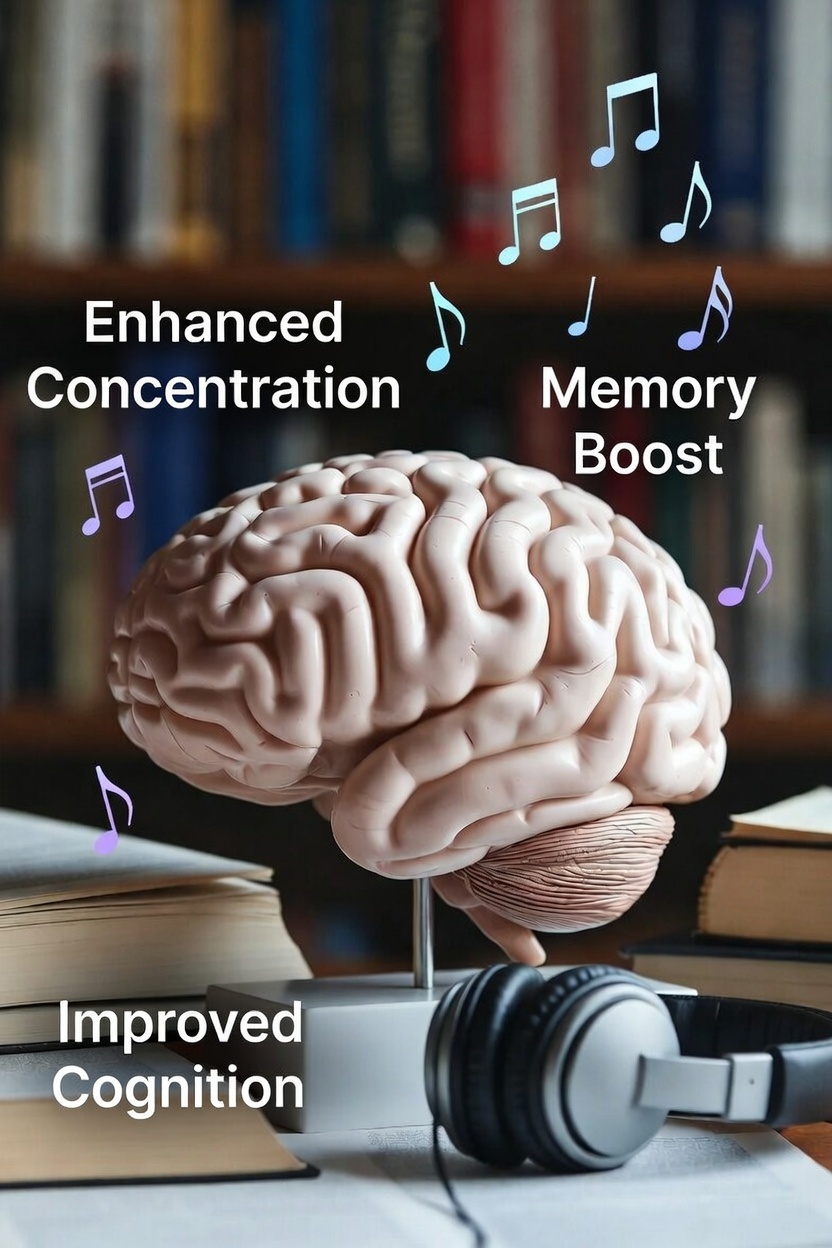
In your quest to level up your cognitive edge, you’ve probably wondered if popping on some tunes during study sessions could supercharge your brainpower. The idea that music might enhance intelligence or learning has been around for decades, popularized by concepts like the “Mozart Effect.” But does it actually help you become smarter? As of January 2026, research paints a nuanced picture: Listening to music while studying can improve focus, memory retention, and mood in certain scenarios, but it doesn’t reliably boost overall intelligence. It often depends on the type of music, the task at hand, and your personal traits. Let’s dive into the evidence from recent studies and reviews to unpack this.
The Potential Benefits: How Music Might Amp Up Your Study Game
Music has a profound impact on the brain, activating multiple regions simultaneously and influencing everything from mood to cognitive processing. When it comes to studying, several studies suggest it can provide a cognitive lift under the right conditions.
- Enhanced Focus and Concentration: Background music, especially instrumental or classical tracks, can help block out distractions and improve attention. A 2007 study found that classical music engages the brain in ways that train it to pay better attention and predict events, potentially aiding tasks requiring sustained focus. More recent research from 2022 showed that relaxing genres like jazz, piano, or lo-fi improved cognitive performance by reducing heart rate and respiration, leading to faster reaction times and better task accuracy—even weeks later. For students dealing with stress or fatigue, music acts as a buffer, promoting relaxation and reducing test anxiety.
- Better Memory and Information Processing: Some evidence points to music aiding memory recall. A 2014 study indicated that older adults performed better on memory tasks after listening to classical music, suggesting it helps the brain absorb and interpret new info more efficiently. In educational settings, music before lessons has been linked to higher motivation, concentration, and self-reported learning success among adolescents. Activating both brain hemispheres, music may maximize learning and memory, as noted by experts in marriage and family sciences.
- Mood and Motivation Boost: Music triggers dopamine release, enhancing mood, motivation, and even creative thinking. This can make studying feel less daunting, indirectly supporting cognitive performance. For instance, a 2025 study on medical students highlighted how certain music types stimulate cognitive functions and create an ideal learning environment.
In short, if you’re grinding through repetitive tasks or need to drown out noise, music could give you an edge by fostering a calmer, more engaged mindset.
The Limitations: When Music Might Hinder Rather Than Help
Not all research sings music’s praises—results are mixed, and it won’t magically raise your IQ. The famous “Mozart Effect,” which claimed listening to Mozart temporarily boosts spatial reasoning, has been largely debunked as overstated. It only applies to specific abstract tasks, not general intelligence, and many studies fail to replicate it.
- Task-Dependent Effects: For complex tasks like reading comprehension or critical thinking, background music can increase cognitive load and divide attention, leading to worse performance. A 2021 survey revealed people use less music for difficult tasks and become pickier about genres as complexity rises. Active music training (like lessons) shows more consistent cognitive benefits than passive listening.
- Individual Differences: Age, personality, and music preference matter. Younger people tend to use more background music, but extraverts might benefit more than introverts. Interestingly, one study linked lower IQ to higher music use for seeking strong sensations, suggesting it might compensate rather than enhance. If lyrics are involved, they can interfere with verbal processing, making instrumental tracks a safer bet.
- No Long-Term Intelligence Gains: While music supports brain health and may slow cognitive decline, it doesn’t make you inherently “smarter” in the IQ sense. A recent 2025 analysis found no significant improvement in focus or memory from music in some student groups.
What Type of Music Works Best?
If you’re experimenting, opt for:
- Instrumental or Classical: Think Mozart or ambient sounds—these minimize distractions and may enhance spatial-temporal skills temporarily.
- Relaxing Genres: Lo-fi, jazz, or binaural beats (like 15Hz tracks) for sustained energy without crashes.
- Personal Favorites: Familiar, enjoyable music often yields the best results, as it boosts mood without overwhelming.
Start with low volume and test what fits your style—perhaps combine with proven nootropics like creatine for that extra brain boost.
Conclusion: Use Music As a Tool, Not a Magic Pill
Listening to music while studying won’t transform you into a genius overnight, but it can be a valuable hack for improving focus, reducing stress, and enhancing memory in the right contexts. For @MakeMyselfSmtr types chasing smarts, it’s worth trying—especially relaxing, lyric-free tunes during less demanding tasks. But for deep, analytical work, silence or white noise might reign supreme. Ultimately, pair it with solid study habits like active recall and spaced repetition for real cognitive gains. What’s your go-to playlist? Experiment and see what tunes your brain best!













0 Comments