
Contrary to popular belief, boosting your intelligence isn’t about innate genius or cramming facts. It starts with foundational habits and mindsets that lay the groundwork for cognitive growth. Drawing from science-backed insights, this article explores the key starting points to embark on your journey to becoming sharper, more adaptable, and intellectually resilient.
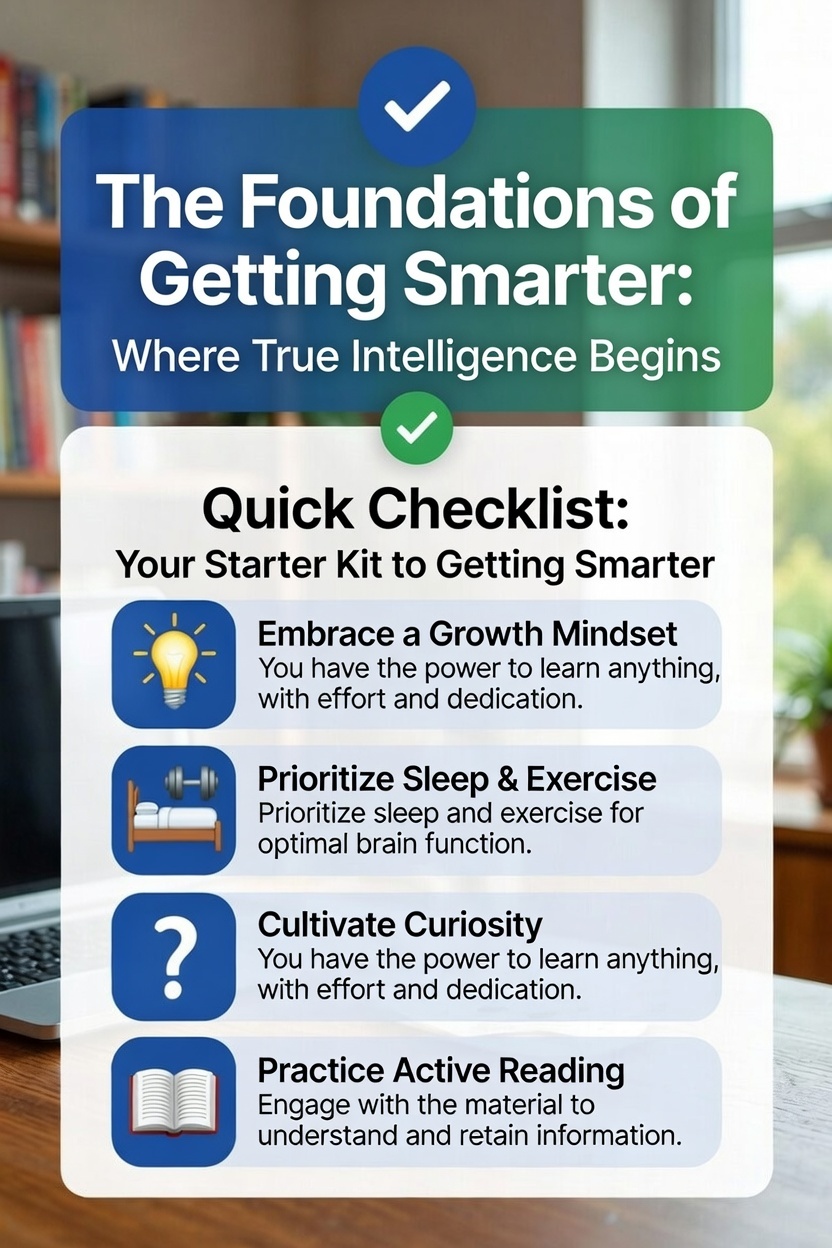
Embrace a Growth Mindset: Believe You Can Improve
The very first step in getting smarter is shifting your perspective. Psychologist Carol Dweck’s research on mindsets shows that people with a “growth mindset”—those who believe intelligence can be developed through effort—achieve more than those with a fixed mindset. Start by affirming that your brain is malleable. Neuroplasticity, the brain’s ability to form new connections, supports this: every new skill or piece of knowledge rewires your neural pathways.
Practical tip: When facing a challenge, replace “I’m not smart enough” with “I haven’t learned this yet.” This simple reframing motivates persistence and learning. Studies from Psychology Today emphasize believing in your potential as step one.
Prioritize Physical Health: Sleep and Exercise as Brain Fuel
Your brain doesn’t operate in isolation—it’s deeply tied to your body. Getting smarter starts with optimizing physical habits. Aim for 7-9 hours of quality sleep nightly; during sleep, your brain consolidates memories and clears toxins, enhancing cognitive function the next day. Pair this with regular exercise: Activities like walking, running, or yoga increase blood flow to the hippocampus, promoting neuron growth and better memory.
Don’t overlook nutrition—incorporate brain-boosting foods like blueberries, green tea, or even coffee in moderation to support focus and alertness. As Healthline notes, these basics form the bedrock of intelligence enhancement.
Cultivate Curiosity and Lifelong Learning
Curiosity is the spark that ignites intellectual growth. Getting smarter begins with asking questions and seeking new experiences. Dedicate time daily to learning something novel—whether it’s a language, instrument, or skill. WikiHow advises committing to lifelong learning as a core step. Challenge yourself: Solve puzzles, play strategy games, or explore topics outside your comfort zone.
Pro tip: Use mental models, like the Pareto Principle (80/20 rule), to focus on high-impact learning. This approach, highlighted by the World Economic Forum, helps harness your cognitive abilities efficiently.
Read Actively and Teach What You Learn
Reading isn’t just passive entertainment—it’s a gateway to smarter thinking. Start with diverse books, articles, or even podcasts to expose your brain to new ideas. But to truly internalize knowledge, teach it to others. Explaining concepts solidifies understanding and reveals gaps in your knowledge. Reddit users swear by deep dives into topics followed by discussions or writing.
Incorporate active strategies: Summarize what you’ve read, question assumptions, and apply insights. Business Insider suggests mimicking how smart people learn, like visualizing or strategizing.
Surround Yourself with Smart Influences and Practice Mindfulness
Environment matters. Spend time with like-minded, intelligent people who challenge your thinking—this osmosis effect boosts your own smarts. Additionally, mindfulness practices like meditation reduce stress and improve focus, creating mental space for deeper cognition.
Meditate for 10-15 minutes daily to enhance clarity. As Oakwood International outlines, prioritizing intellectual growth through such habits is key.
By embracing a growth mindset, nurturing your physical health, fueling curiosity, engaging actively with knowledge, and cultivating supportive habits, you’ll unlock your brain’s full potential. Remember, in 2026’s AI-driven landscape, the smartest move is consistent action. Start with one checklist item today, build momentum, and watch your intellectual capabilities soar. Your journey to a sharper mind begins now—what’s your first step?












0 Comments